


In this article we will compare some Ufispace devices with Huawei.
We are going to talk about 4 pieces of equipment here:
– Ufispace S9510-28DC Disaggregated Cell Site Gateway Router
– Huawei S6730-H24X6C Switch
– Ufispace 9600 Open Aggregation Router
– Huawei NE8000 M4 Router
We have chosen models that are similar in terms of number of ports, traffic capacity and features. Both Huawei and Ufispace have very good solutions for ISPs, with equipment that supports protocols such as OSPFv2/v3, IS-IS, BGP, MPLS, SR MPLS, SRv6, VXLAN, among others.
Huawei is a Chinese brand well known among ISPs for its routing and switching solutions, with equipment such as the Huawei NE40 and NE8000 routers and the S5700 and S6700 switches, among others. It offers a robust product lineup to meet the needs of ISPs.
Ufispace, from Taiwan, has a complete solution for switches and routers, and comes with an “Open Network” concept, meaning that the user can decide which management software to install on the hardware, such as IP Infusion‘s Ocnos, which is mature software with all the routing functionalities needed by ISPs.
Let’s start by talking about the Huawei NE8000 M4 router.
It’s a modular router that comes with the following features:
– 16G of RAM
– Six Core CPU
– It comes with 4 combo 100G ports, which can be modified via configuration to use 10G ports;
– Supports up to 4 expansion cards;
– Supports up to 12 100G ports;
– Switching capacity 2.4 Tbps
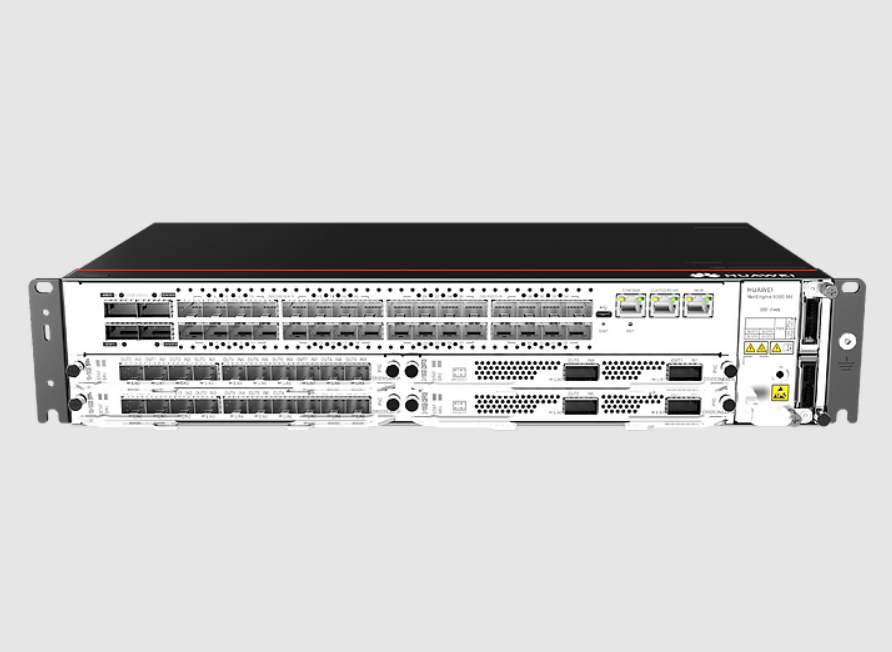
This router is widely used by ISPs as a BGP router and supports 25 million routes in the RIB and 4 million in the FIB. It is also widely used as a BNG PPPoE or IPoE concentrator, supporting up to 64,000 subscribers.
On the other hand, we have a Ufispace S9600-72XC router, which has the following features:
– 32G of RAM;
– Octa Core CPU;
– Comes with 64 1/10/25G SFP28 ports;
– 8 ports of 4/100G QSFP28;
– Switching capacity 2.4 Tbps
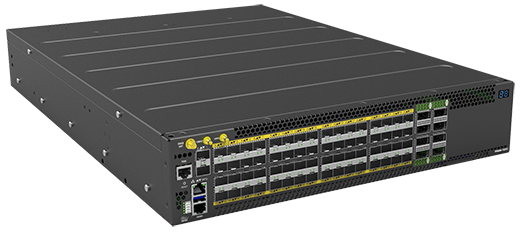
Ufispace is a very good brand that has made a name for itself in the ISP market. This particular model supports 20 million routes in the RIB and around 4 million in the FIB, so it can be used very well as an edge router. And because it’s a White box (you can choose an operating system), it can be used as a BNG. For more details about BNG in Ufispace, I suggest reading the article Using OpenBNG to build Resilient Broadband Networks – https://www.ufispace.com/company/blog/openbng-resilency-models
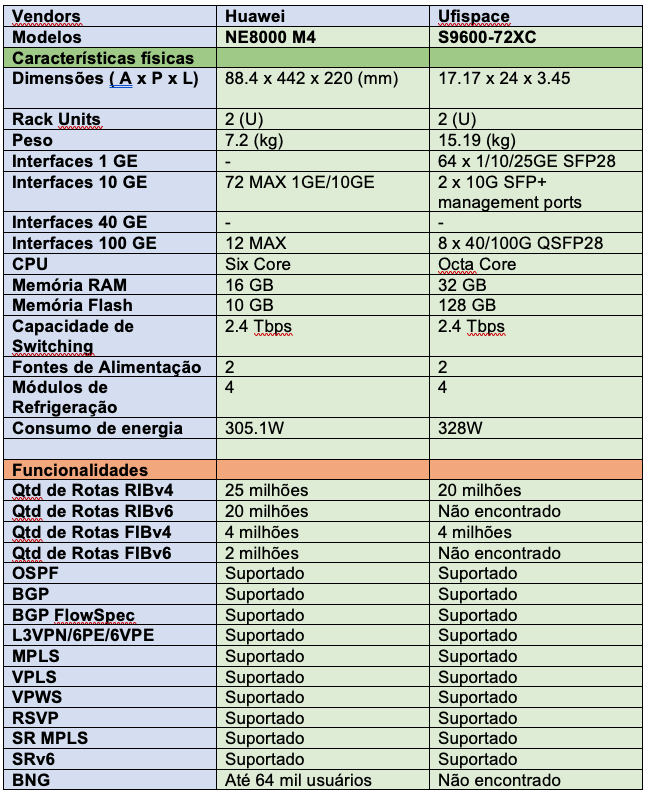
Below is a table comparing some of the features of each router model:
Now let’s talk about the switches. Let’s also make a brief comparison between the Huawei S6730-H24X6C and the Ufispace S5910-28DC.
We started by checking out the Huawei S6730-H24X6C switch, which comes with a few features:
– 4G of RAM
– Quad Core CPU
– Comes with 24 10G ports;
– 6 ports of 40/100G;
– Switching capacity 1.68 Tbps
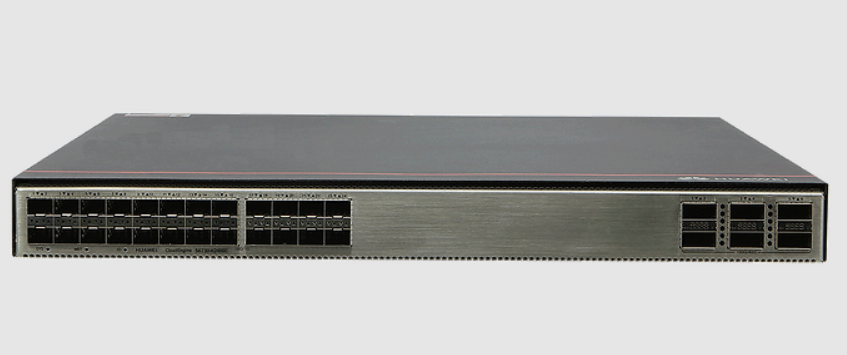
Huawei switches are well known and widely used in ISPs for access and aggregation functions in MPLS networks. It’s a switch that comes with good traffic capacity and is even used in some cases for BGP for CDN boxes such as Google, Netflix and FNA.
On the other hand, we have the Ufispace S5910-28DC switch, which comes with similar features:
– 8G (standard) or 16G (Premium) of RAM;
– Quad Core (standard) or Octacore (premium) CPU;
– Comes with 24 10G/25G ports;
– 2 ports of 40/100G;
– 2 ports of 100/400G;
– Switching capacity 800 Gbps
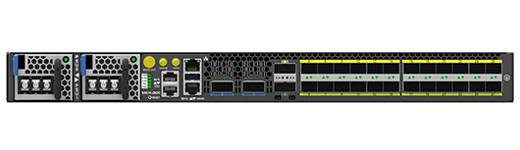
This is a switch that is gaining notoriety for having 400G ports, and it can very well be used in the MPLS backbone in the P/PE functions, and in the BGP function, as it supports 3.5 million routes in the RIB and 1.2 million in the FIB.
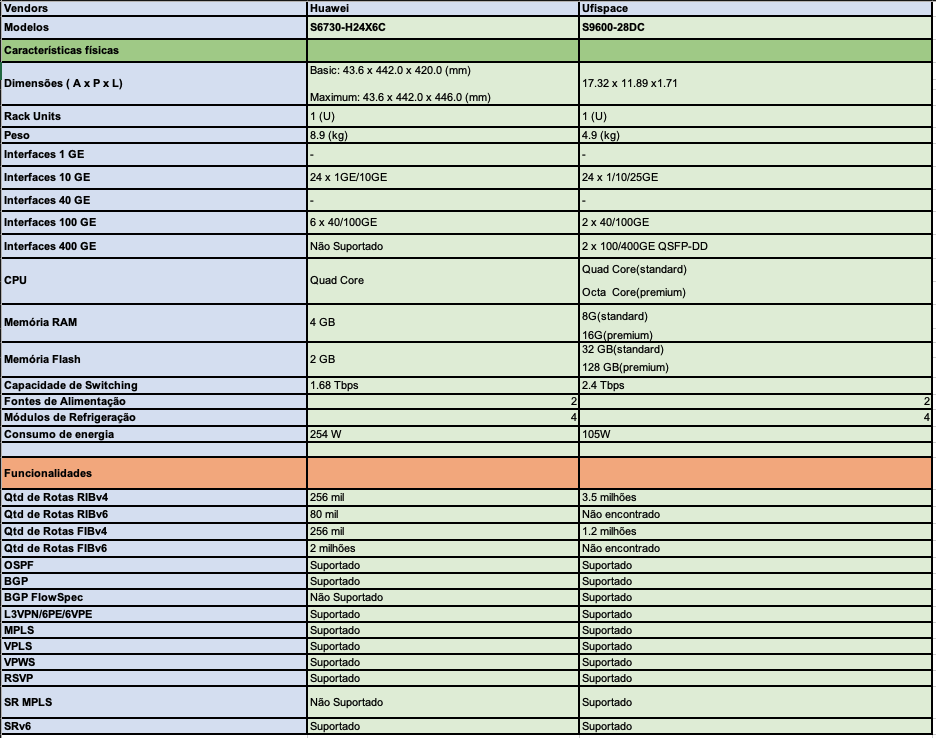
Below is a comparison table between the switches:
Conclusion:
In this article we’ve seen a brief comparison between some Huawei and Ufispace models. We chose models that are similar in terms of traffic capacity, number of ports and functionalities.
Both devices have protocol interoperability and can be deployed together, making them great options for ISP networks.